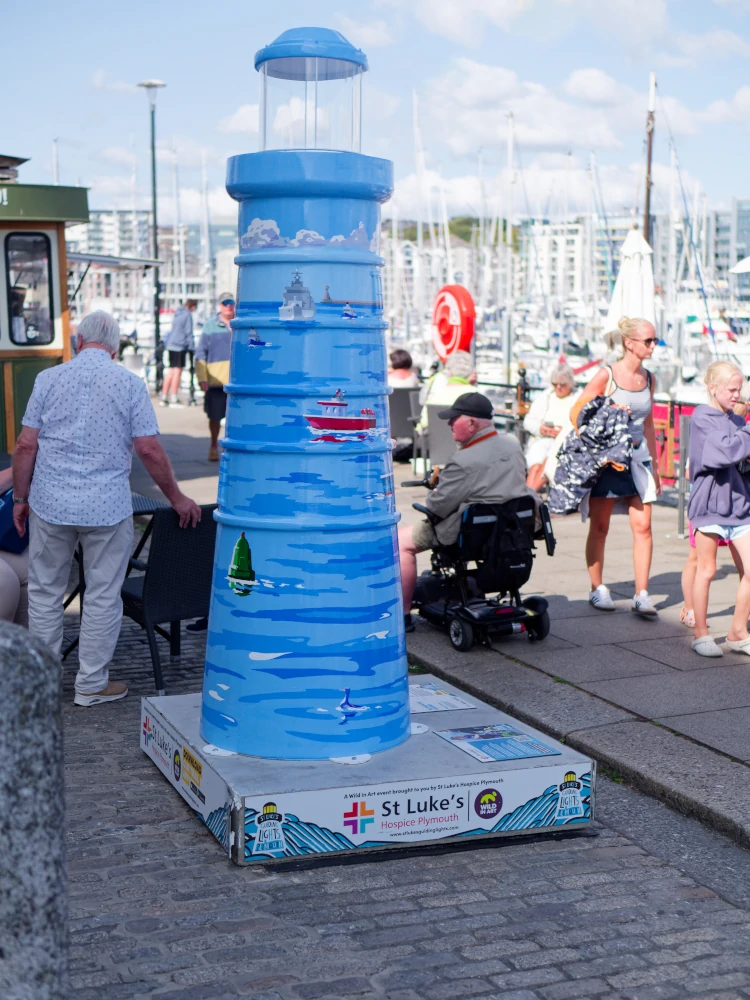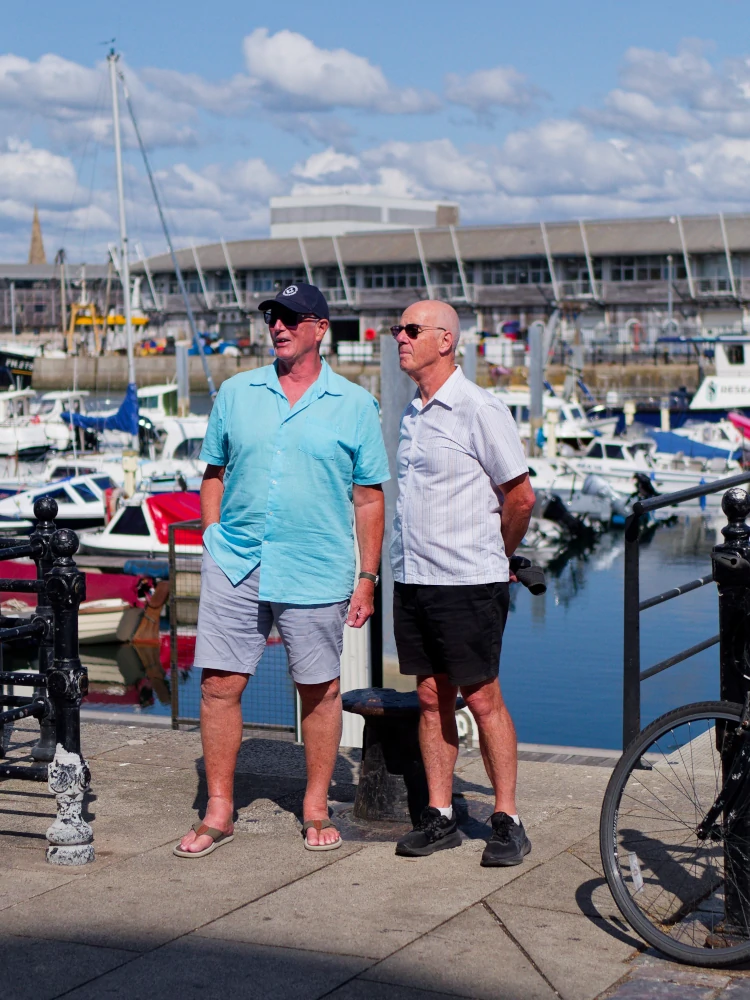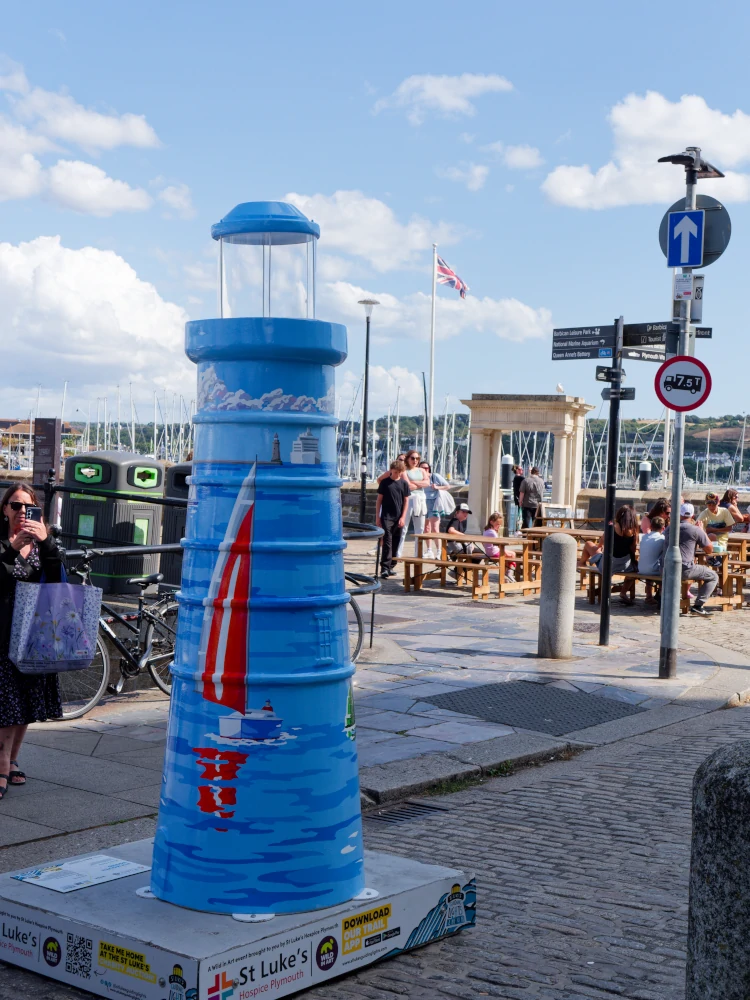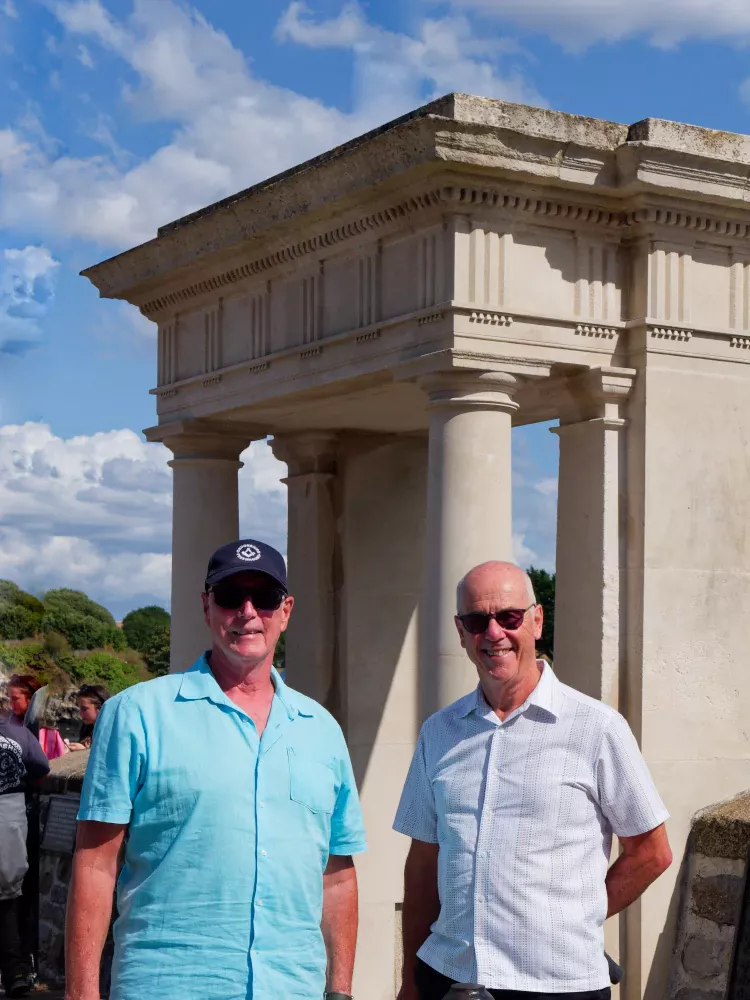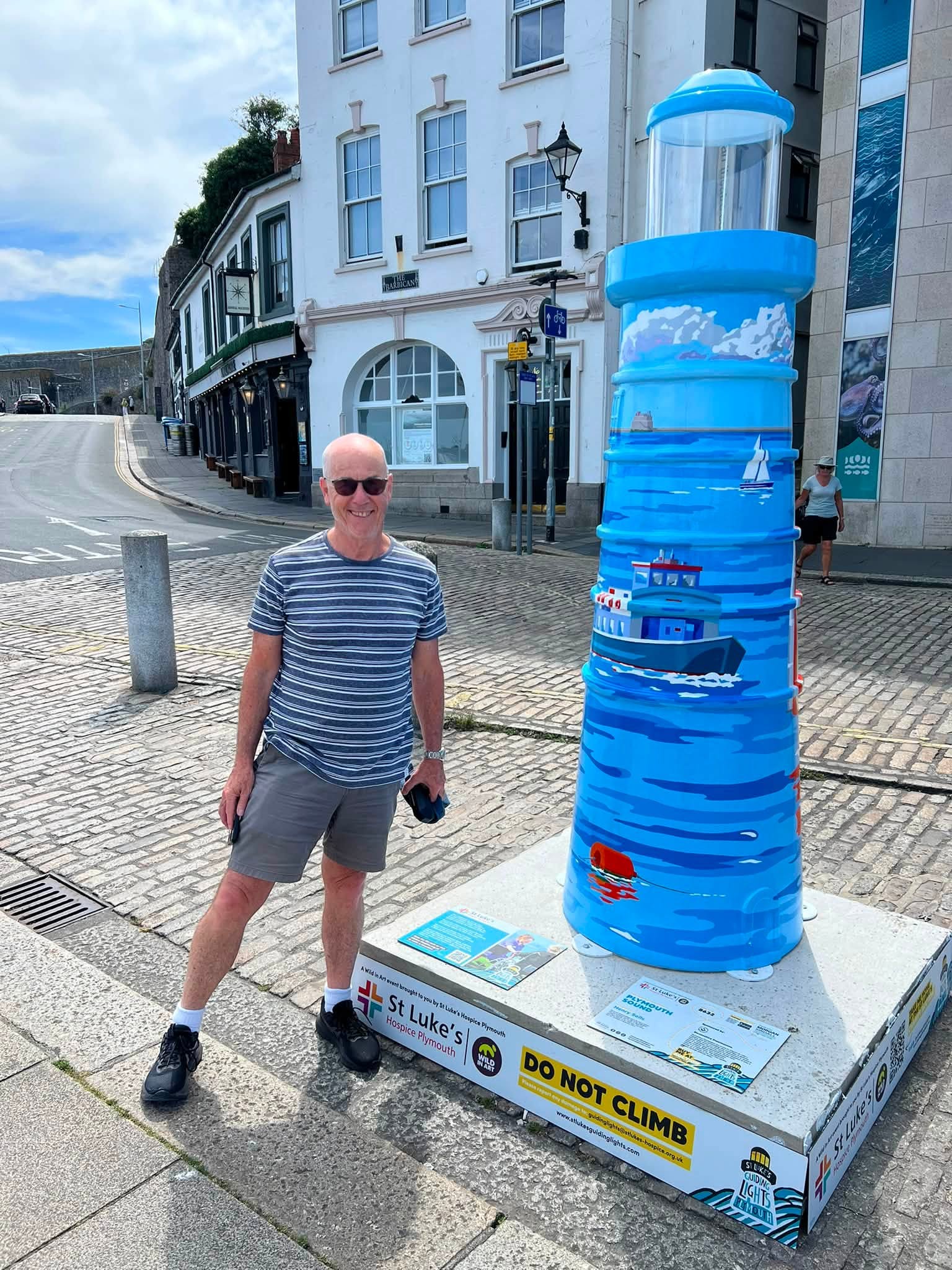
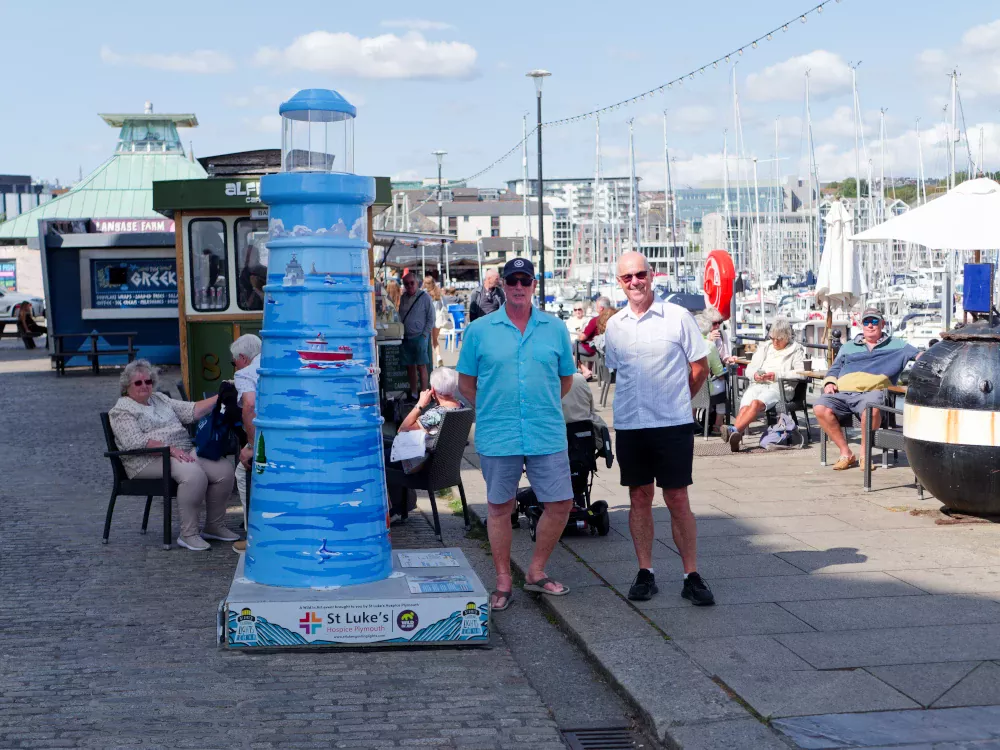
Standing beside the Mayflower Steps on Plymouth’s historic Barbican, one of this summer’s newest landmarks could hardly be better matched to its surroundings.
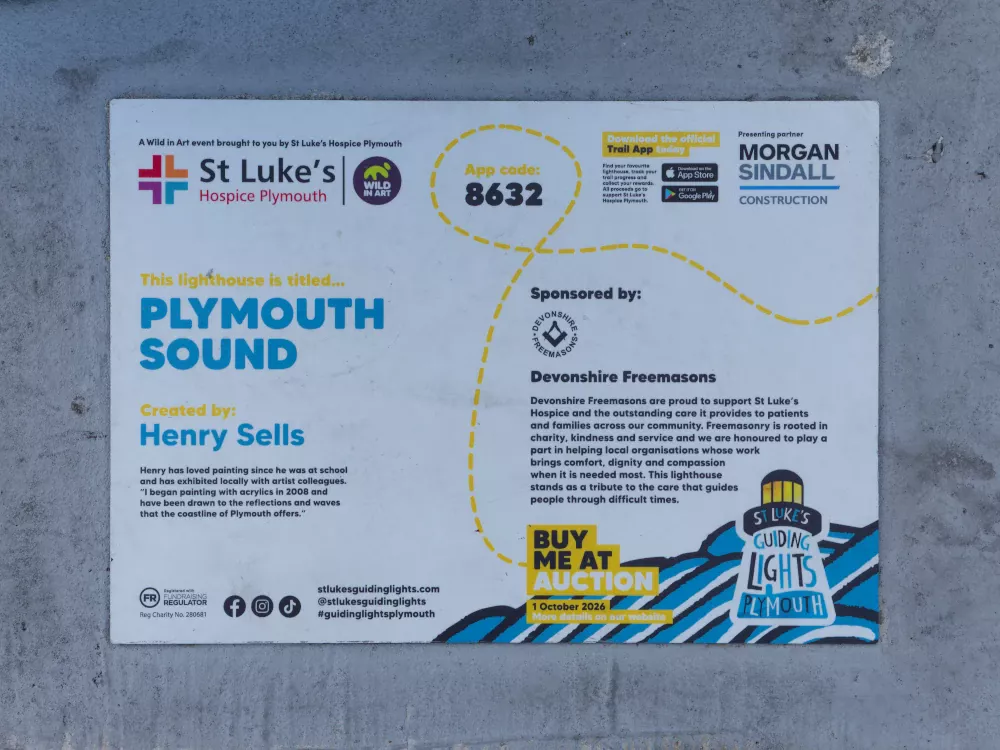
Plymouth Sound is a 2.4-metre lighthouse sculpture painted by local artist Henry Sells and sponsored by Devonshire Freemasons as part of St Luke’s Hospice Plymouth’s Guiding Lights art trail. Wrapped in shades of blue, the design brings together the sea, changing light and an assortment of vessels familiar to anyone who spends time looking out across the Sound. Sells, who has painted in acrylics since 2008, says he has long been drawn to the reflections and waves of Plymouth’s coastline.
Its position gives the sculpture an especially appropriate backdrop. The Mayflower Steps stand close to the site from which the Mayflower is believed to have made its final departure from England in September 1620, carrying 102 passengers across the Atlantic. The original departure point no longer survives; today’s familiar Portland stone portico was built in 1934 and is Grade II listed. With Sutton Harbour on one side and the waters of Plymouth Sound beyond, it is a spot where the city’s relationship with the sea is never far away.
A trail with a purpose
Plymouth Sound is one of 41 large lighthouse sculptures which have appeared across Plymouth’s streets and waterfront this summer. Produced by St Luke’s in partnership with Wild in Art, the free Guiding Lights trail opened on 6 July and continues until Sunday 13 September, turning a walk around the city into something of a lighthouse hunt.
There is more to the project than the main trail. St Luke’s has worked with 42 schools and education establishments from Plymouth, Devon and Cornwall on its Little Lights project, using smaller lighthouse sculptures and educational resources to encourage creativity while also helping young people talk more openly about death and dying. Another group of ten smaller sculptures has travelled through communities served by St Luke’s, including Kingsbridge, Tavistock and Dartmoor.
Once the main trail is over, the sculptures will be brought together for a farewell exhibition at Market Hall in Devonport from 25–27 September. The large and roaming lighthouses will then be auctioned at the University of Plymouth on 1 October, with profits from the sales going directly towards St Luke’s care.
The lighthouse was deliberately chosen as the symbol for the project. It connects naturally with Plymouth’s maritime history, but there is a deeper idea behind it too: a light offering direction and reassurance when circumstances become difficult or uncertain. That is a simple analogy for the work hospice teams carry out every day.
Much more than a hospice building
St Luke’s is an independent charity providing specialist end-of-life care for adults with progressive life-limiting illnesses across Plymouth, South West Devon and East Cornwall. At any one time it supports more than 300 patients and their families.
Perhaps less well understood is how much of that care takes place away from the hospice itself. The majority of St Luke’s patients are supported in their own homes, with specialist nurses, doctors, occupational therapists and social workers working alongside families, carers, GPs and other health and social-care professionals. Their work can include managing difficult symptoms, helping people maintain independence, offering practical and emotional support and helping families cope with an immensely difficult period in their lives. For patients who need more intensive specialist care, St Luke’s also has its inpatient unit at Turnchapel.
That wider picture is an important reason Devonshire Freemasons have chosen to build a closer relationship with St Luke’s. In 2025, a three-year partnership was established to provide continuing support while also encouraging lodges and members to become more involved with the charity and help raise awareness of its work. As Nicholas Ball said when the partnership was announced, the intention was to be about “more than just financial support”, with an emphasis on being present and active in the community.
The relationship with St Luke’s forms part of a broader commitment to the four adult hospices serving communities across Devon: St Luke’s in Plymouth and the surrounding area, Rowcroft in South Devon, Hospiscare across Exeter, central and east Devon, and North Devon Hospice. Although each serves a different part of the county, they share a model in which specialist care reaches far beyond an inpatient building and into people’s homes and communities.
That is also where the sponsorship of Plymouth Sound fits into Devonshire Freemasons’ wider Community Engagement work. Supporting local organisations is not simply about making donations; it is about developing relationships with the people already doing important work in Devon, becoming more visible and useful within our communities, and helping those organisations reach a wider audience.
For the moment, Plymouth Sound remains at the Mayflower Steps, surrounded by boats, visitors and the constantly changing colours of the harbour that inspired its artist. After 13 September it will begin the next stage of its journey towards the auction.
Until then, it is well worth seeking out — not simply because it is our lighthouse, but because the trail it belongs to shines a light on a service that thousands of local families may one day need.